
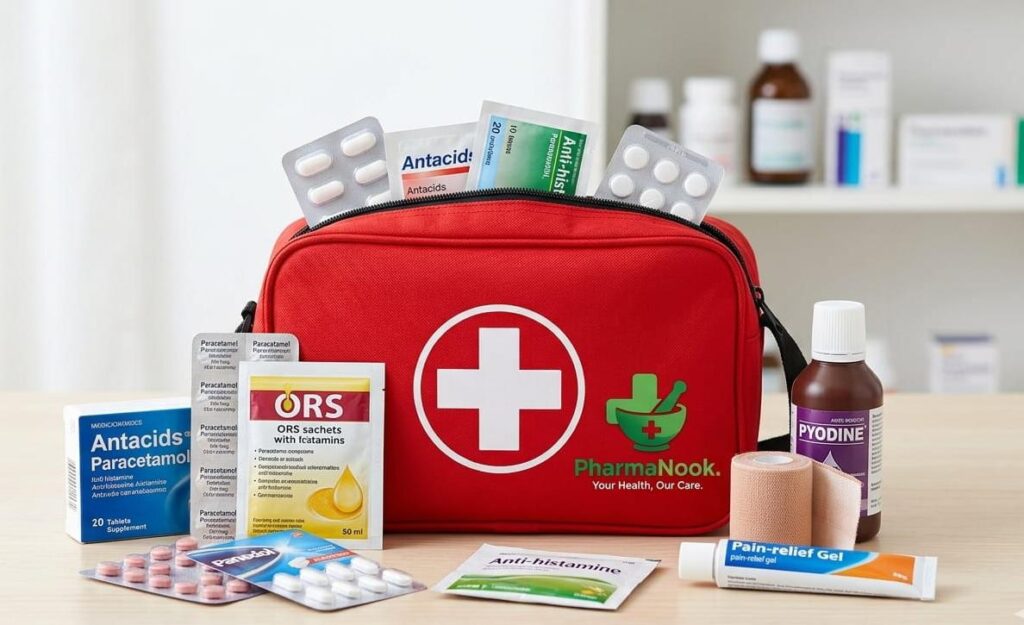
Essential Medicine List You Must Have in Your Home Emergency Kit
Imagine it’s 2 AM and a family member develops a sudden fever or a severe headache. During such hours, rushing to a pharmacy can be stressful. At Pharmanook, we believe that being prepared is the first step toward better health. Today, we bring you the 7 essential medicine list every household should keep at home.
1. Pain and Fever Relief (Paracetamol or Panadol):
This is the most fundamental medicine for any home. Whether it’s a high fever, a tension headache, or general body aches, Paracetamol (such as Panadol or Calpol) provides reliable relief.
How to Use:
Adults can take 1-2 tablets every 4 to 6 hours, but never exceed 8 tablets in 24 hours. Always take it with water after a meal to avoid stomach irritation.
2. Relief for Heartburn and Indigestion (Antacids):
Late-night heavy meals or spicy food can often lead to uncomfortable heartburn or indigestion. Keeping Antacids (like Gaviscon or Digene) in your kit can provide instant relief from that burning sensation.
3. Tackling Seasonal Allergies (Anti-histamines):
Dust, pollen, or sudden weather changes often trigger sneezing or itchy eyes. Having an anti-histamine (like Softin or Rigix) at home helps you manage these symptoms before they get worse.
4. Preventing Dehydration (ORS – Oral Rehydration Salts):
Stomach upsets can lead to rapid fluid loss. Dehydration is a serious concern, especially for children. Always keep ORS sachets ready to maintain essential body salts.
5. First Aid Essentials (Antiseptics and Bandages):
Minor cuts in the kitchen or scrapes from playing outdoors are common. Antiseptics like Pyodine, along with sterile bandages, are crucial to prevent infections and promote fast healing.
6. Managing Muscle Pain and Sprains (Pain-Relief Gel):
A sudden muscle pull or a minor ankle sprain can happen anytime. A topical pain-relief gel (like Voltral or Move) is excellent for soothing local pain without needing oral pills.
7. Quick Fix for Gas and Acidity (Omeprazole):
For those who frequently deal with chronic acidity, keeping a doctor-recommended Omeprazole (like Risek) can help manage gastric issues effectively. and quick relief.
Safety First: How to Manage Your Home Kit
- Check Expiry Dates: Every 3 months, go through your kit and discard any expired medicines.
- Storage Matters: Keep your medicines in a cool, dry place. Avoid damp bathrooms or direct sunlight.
- Out of Reach: Always store your medical box in a high place where children cannot reach it.
Frequently Asked Questions.
Q: Can I keep medicines in the bathroom?
Ans: No, medicines should be stored in a cool, dry place away from sunlight and moisture. The kitchen or bathroom are usually not ideal.
Q: What should I do with expired medicines?
Ans: Check your kit every 6 months. Expired medicines should be disposed of safely and replaced immediately.
We hope this essential medicine list helps you stay safe.
Conclusion
A well-stocked home emergency kit is a lifesaver. By keeping these 7 essential medicines. you ensure that your family is safe during sudden health issues. PharmaNook recommends consulting the doctor for any serious symptoms.
Hello how are you?